
Ismaili Center Houston


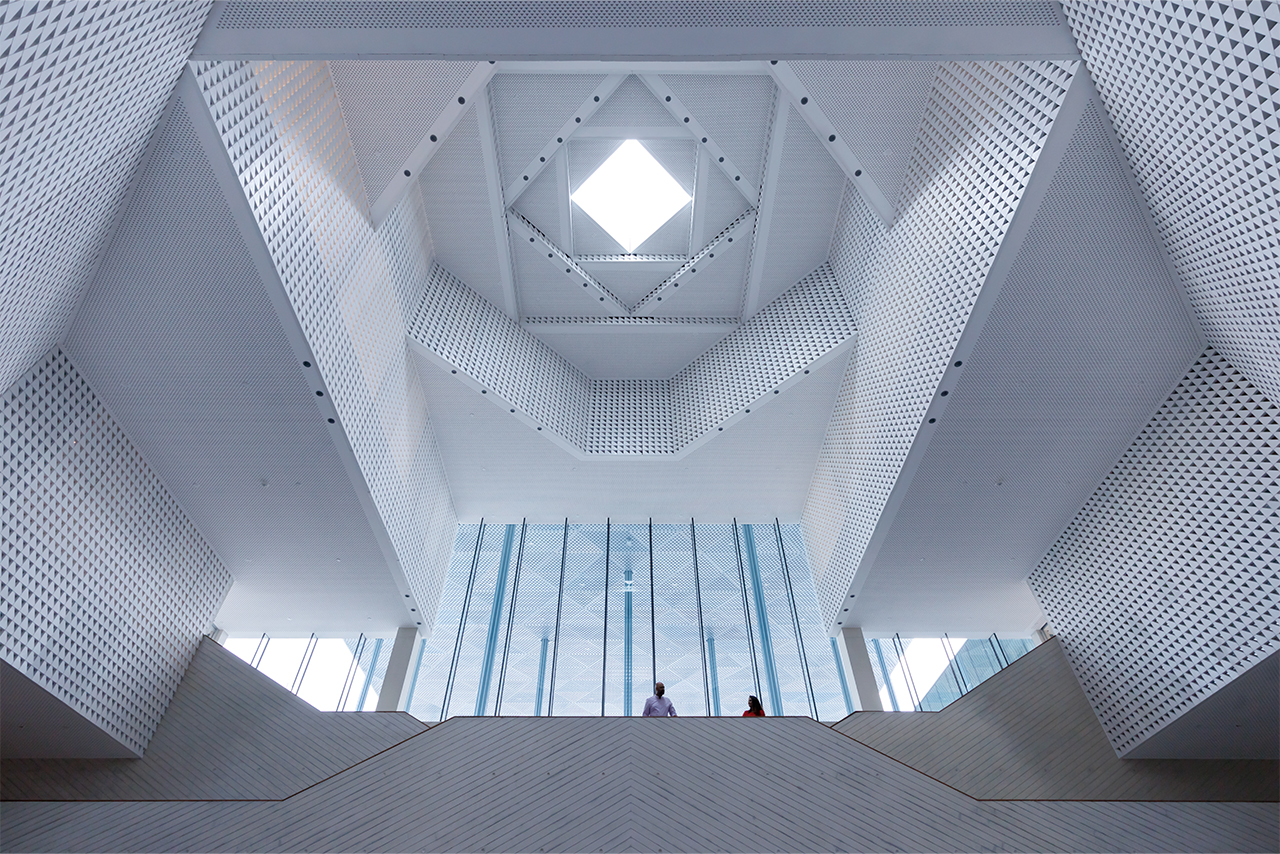
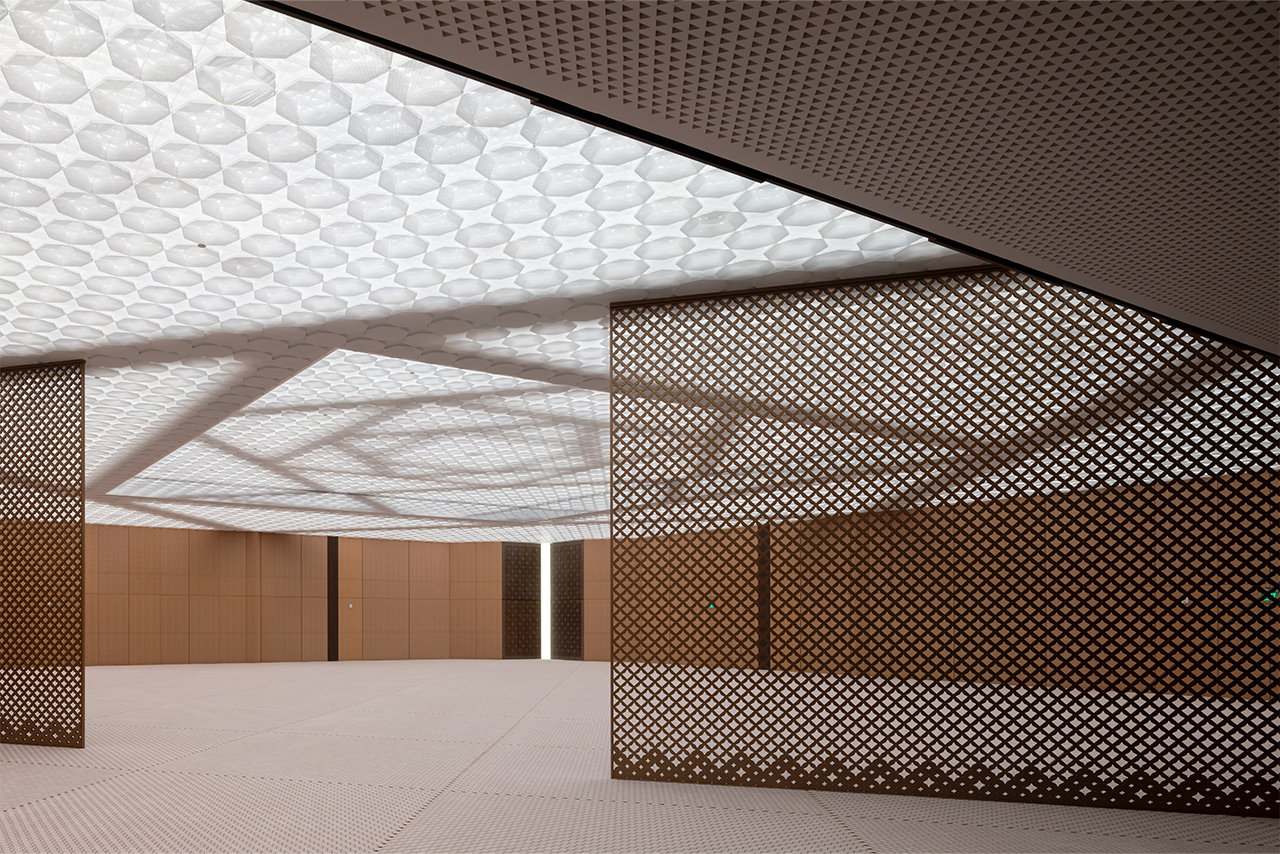
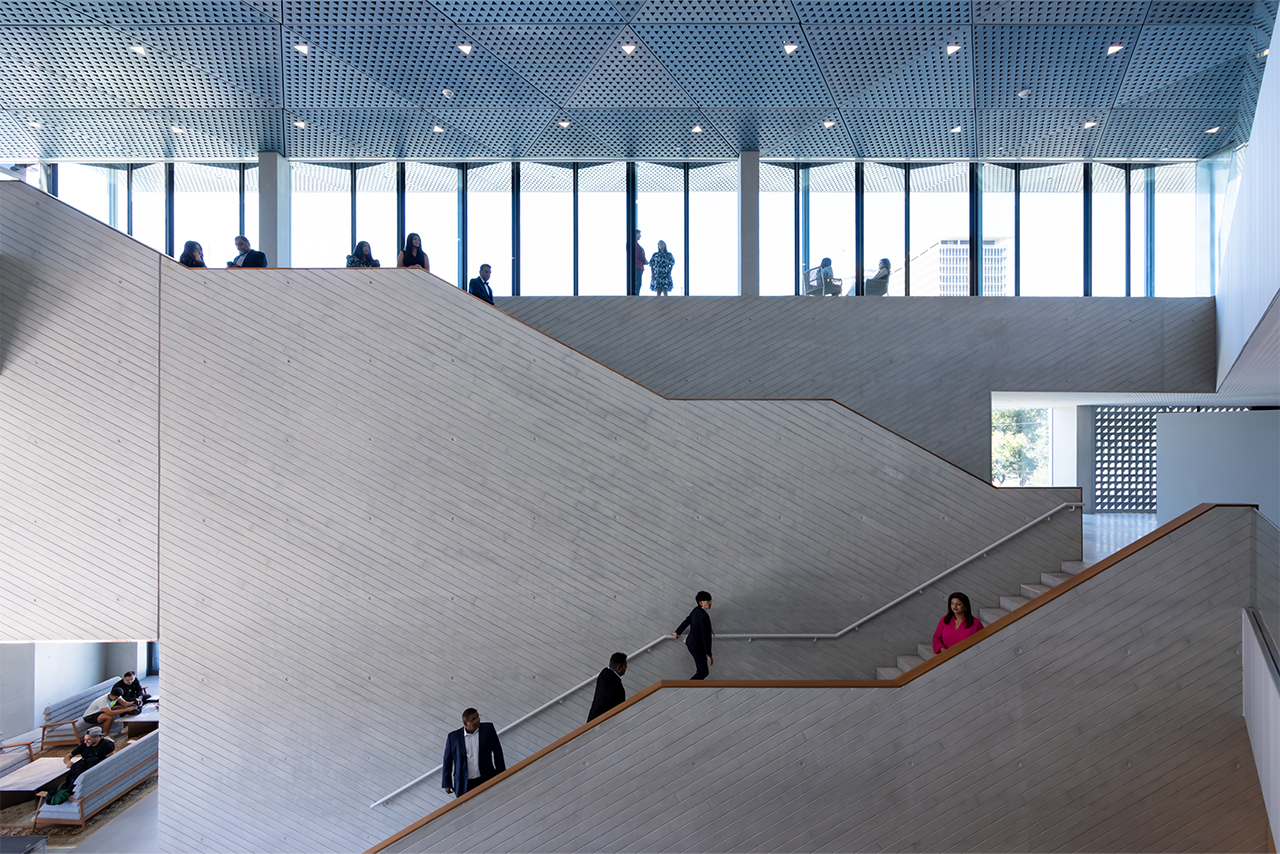
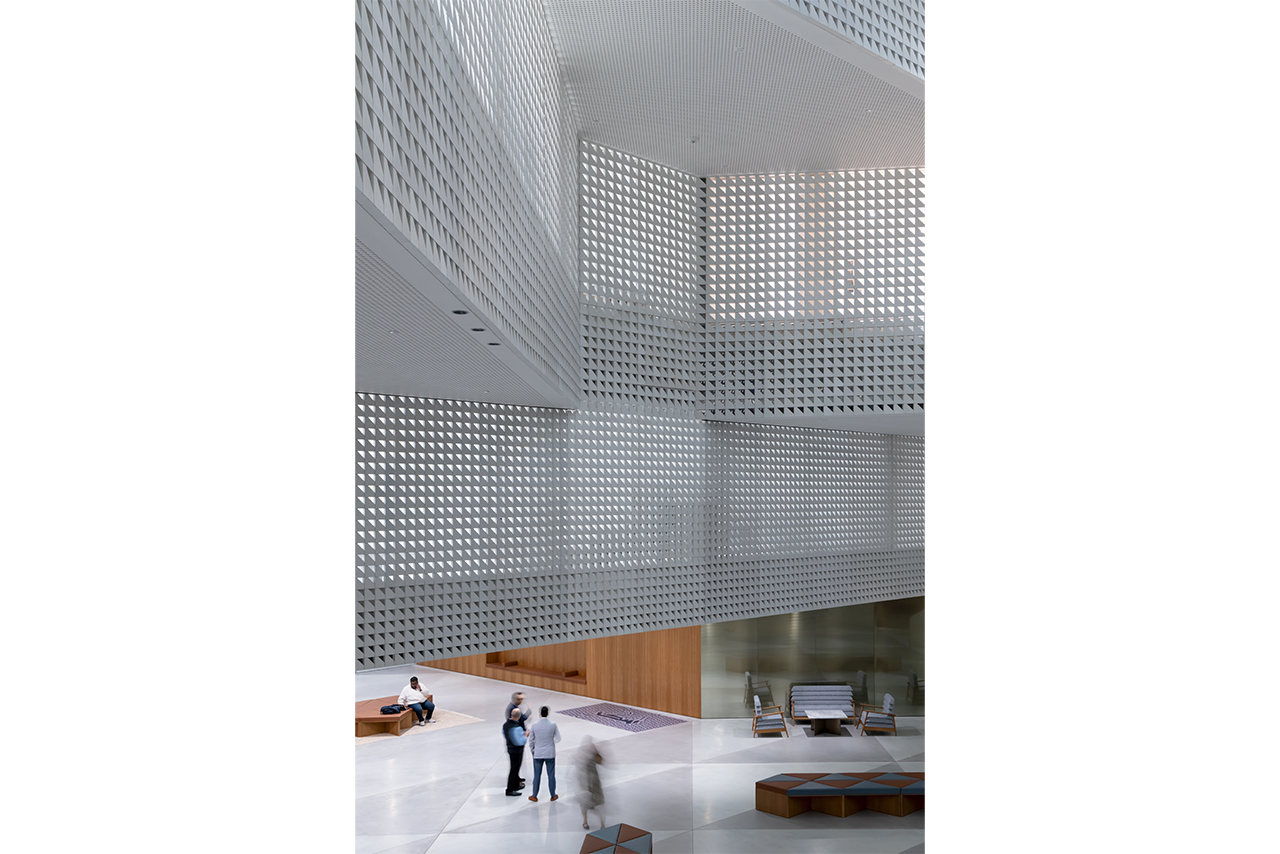
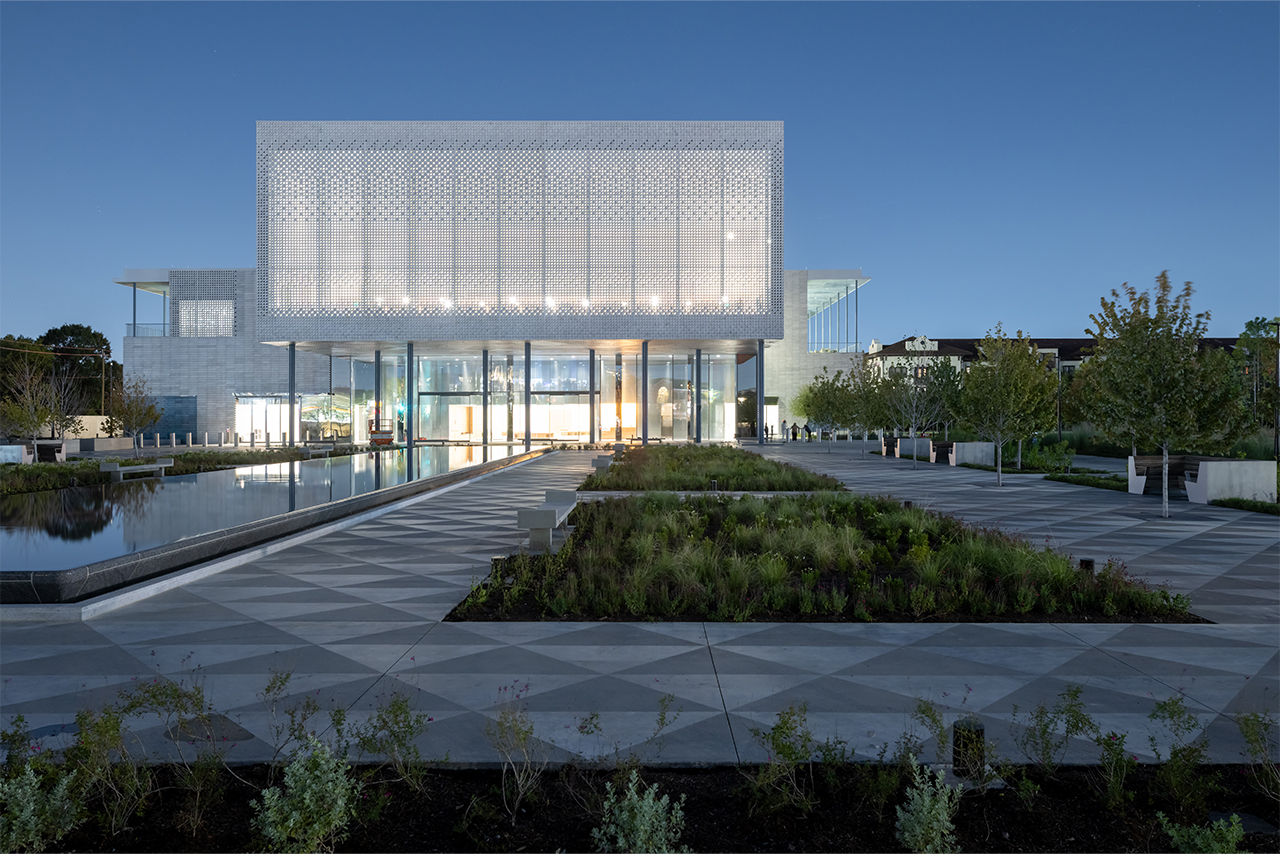
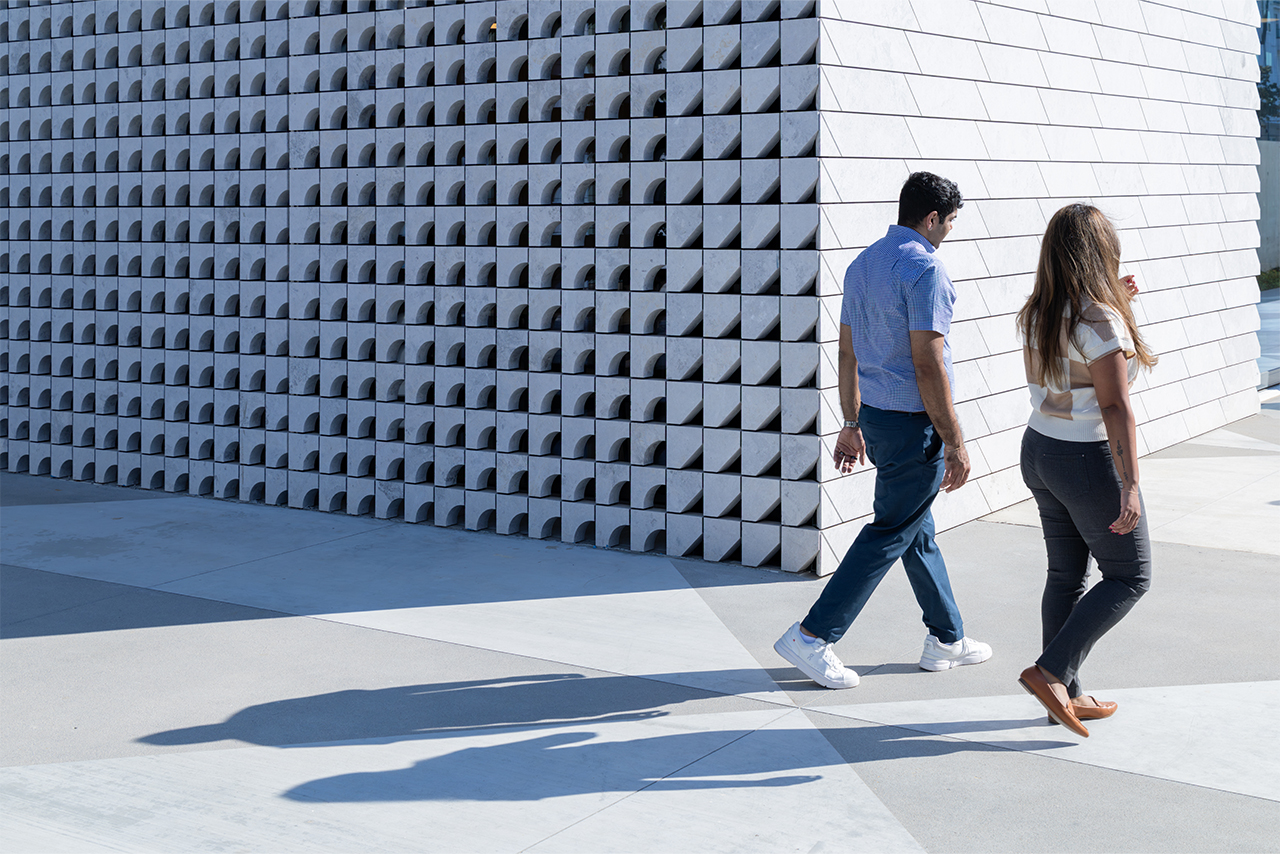
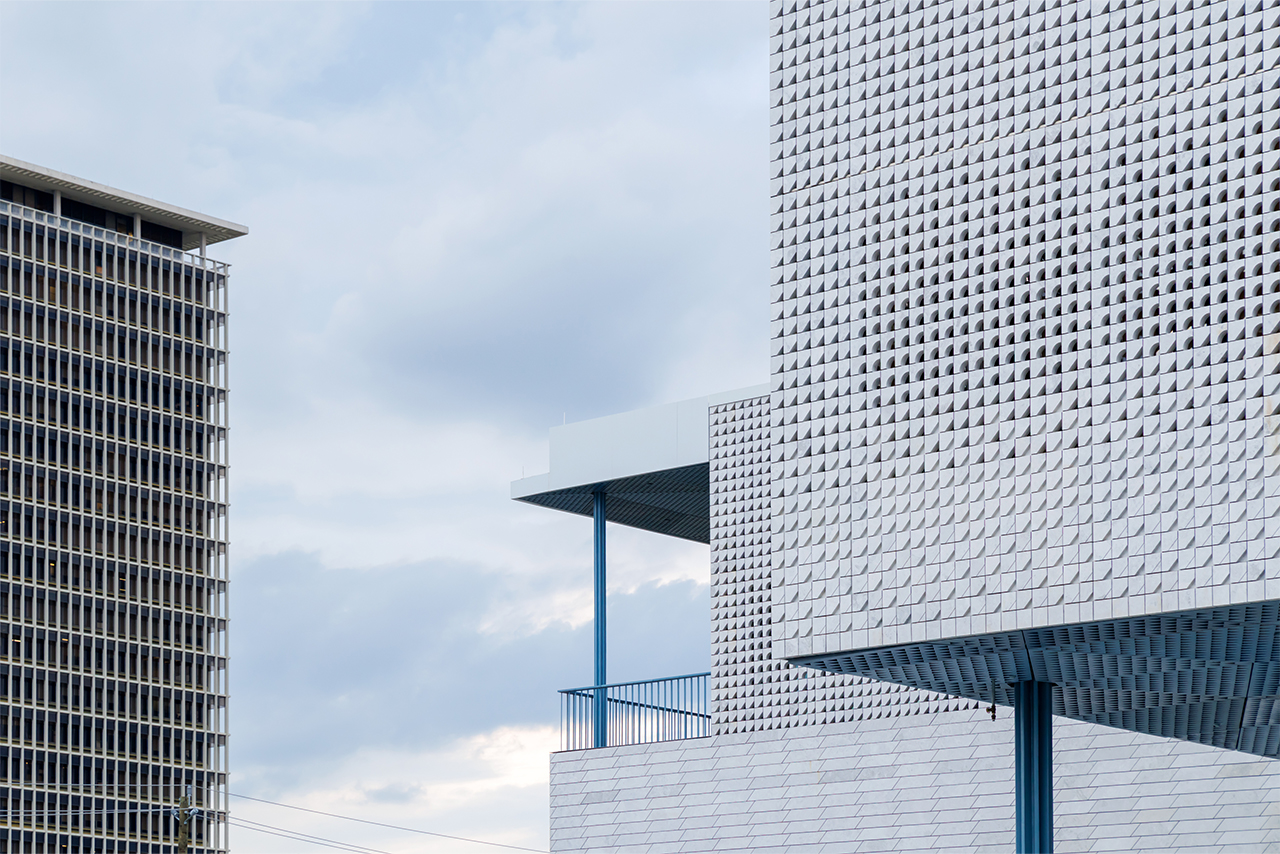
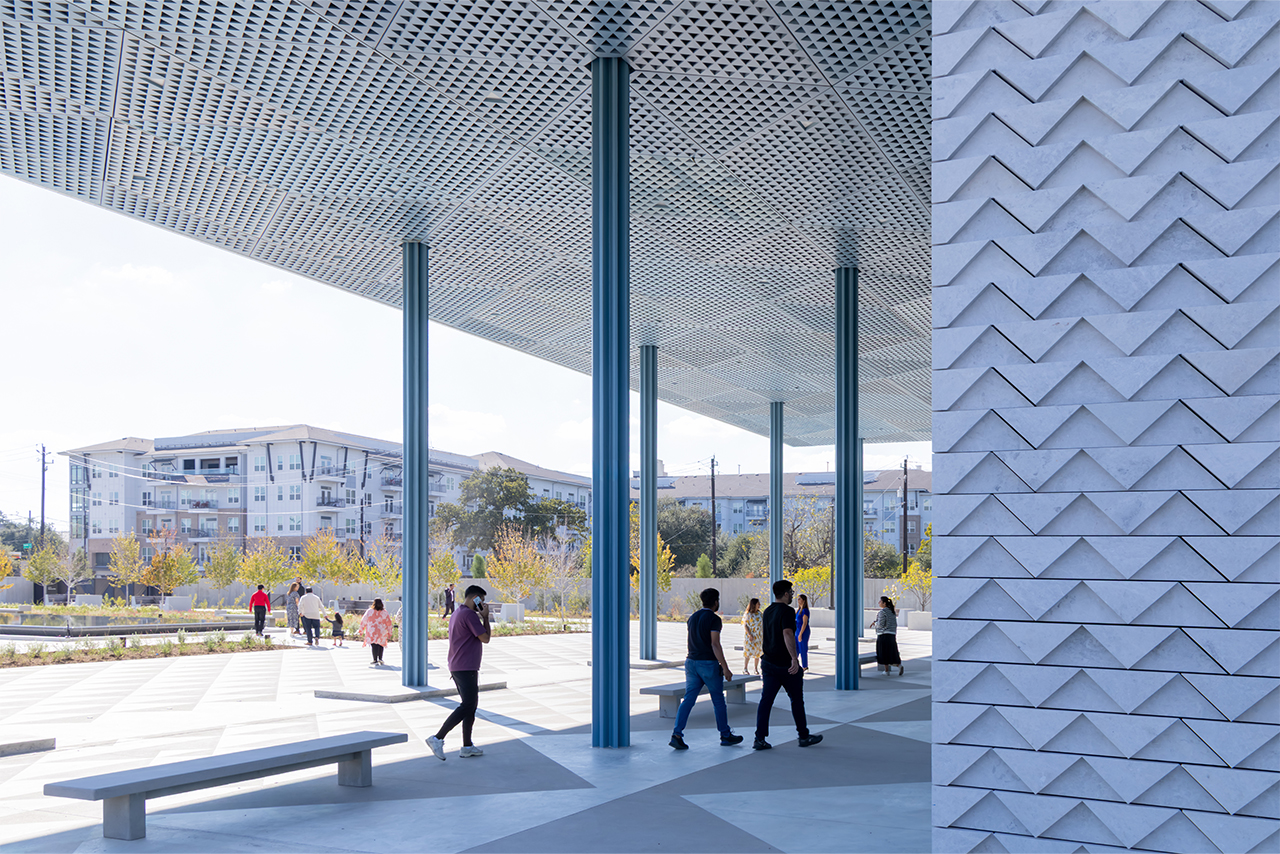
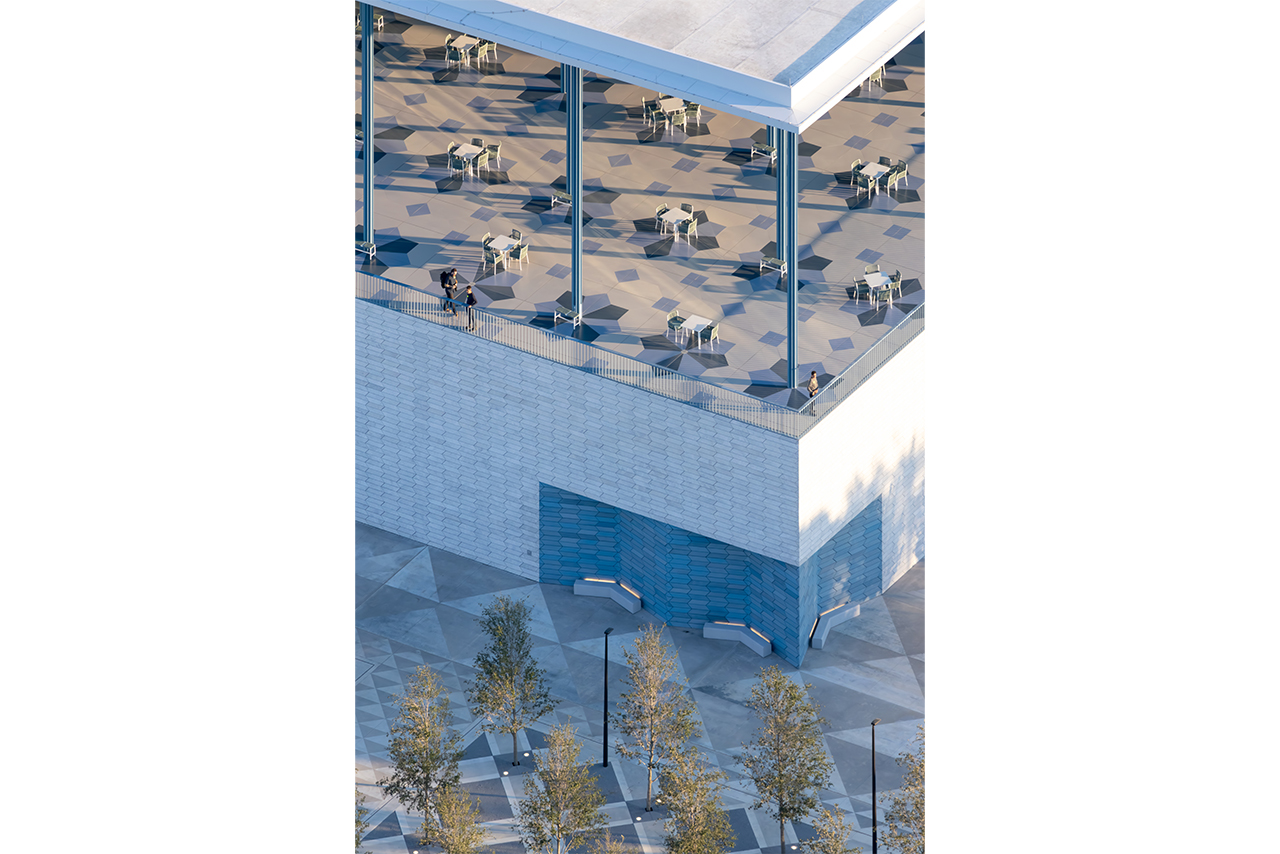
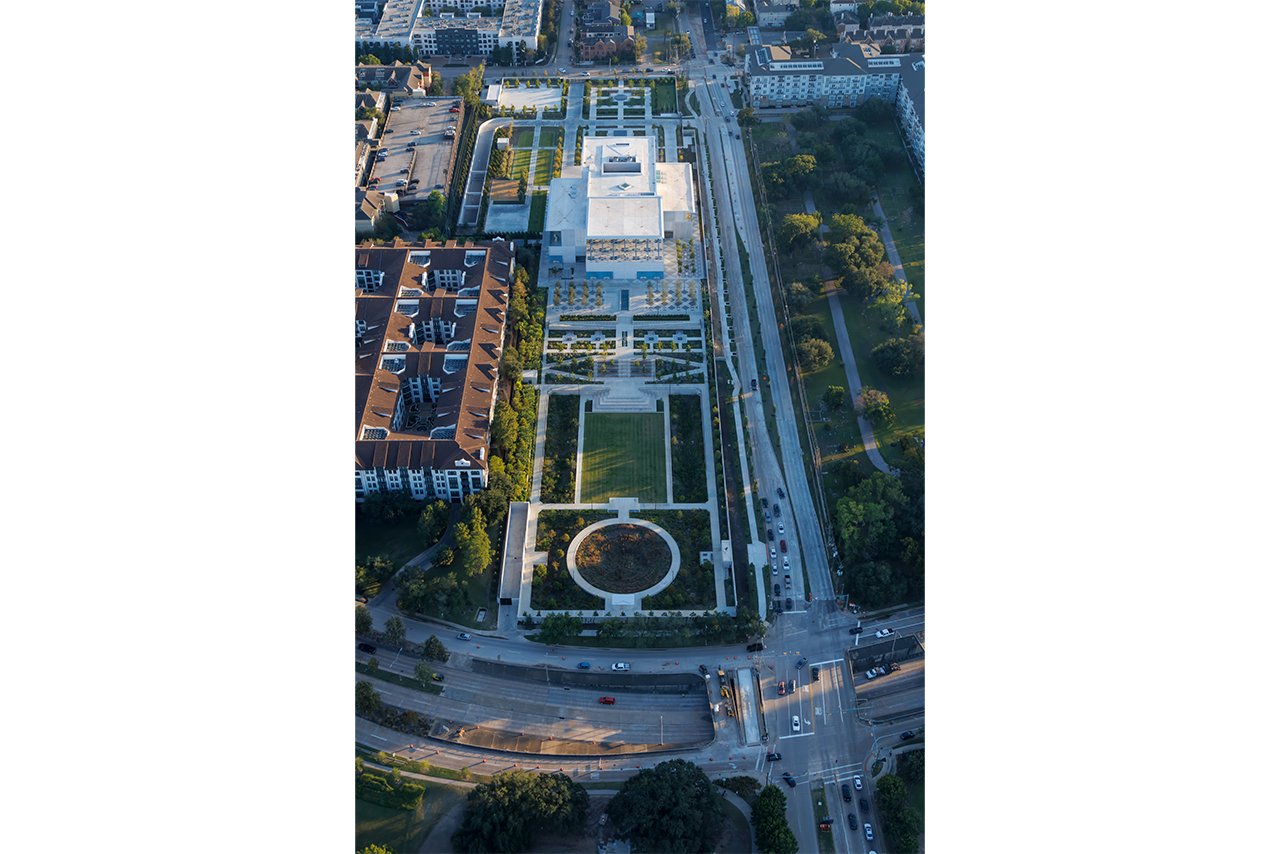
Situated on Allen Parkway and Montrose Boulevard, the Ismaili Center Houston was commissioned by His Highness the late Aga Khan, spiritual leader of the Ismaili community and founder of the Aga Khan Development Network.
Dedicated to advancing pluralism, public understanding, and civic outreach, the Center joins counterparts in London, Lisbon, Dubai, Dushanbe, Vancouver, and Toronto. Each of these buildings reflects its own geography and context. As ambassadorial buildings, they express the Ismaili community’s presence, pluralistic outlook, and ethos of volunteering.
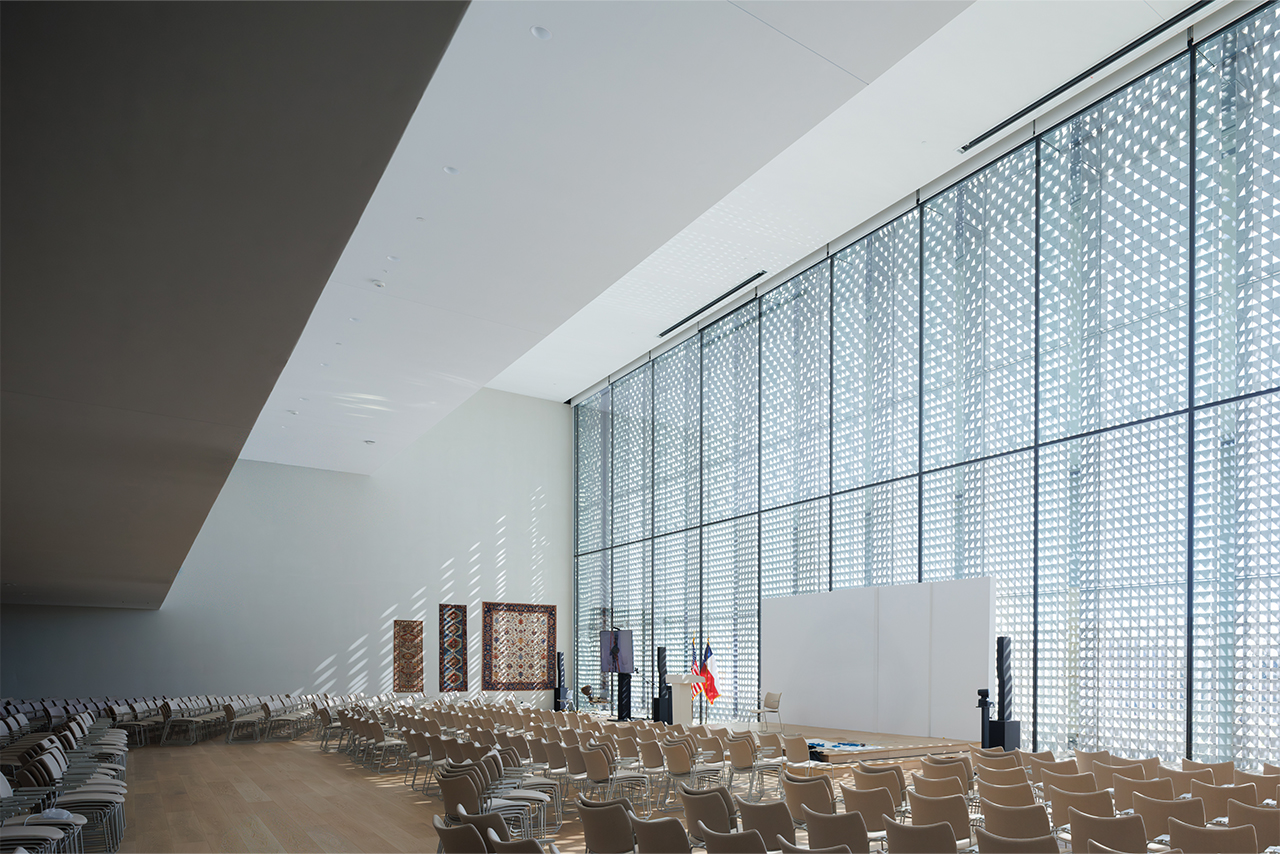
The Ismaili Center Houston is a venue for educational, cultural, and social events, encouraging understanding and facilitating the sharing of perspectives across peoples of diverse backgrounds, faiths, and traditions. The building contains two social halls, a black box theater, a cafe, exhibition spaces, a library, classrooms, and the administrative offices of the Ismaili Council USA. It builds bridges through intellectual exchange by hosting concerts, recitals, plays, performances, exhibitions, conferences, seminars, conversations, book launches, and community gatherings. The building also provides space for quiet contemplation and prayer.
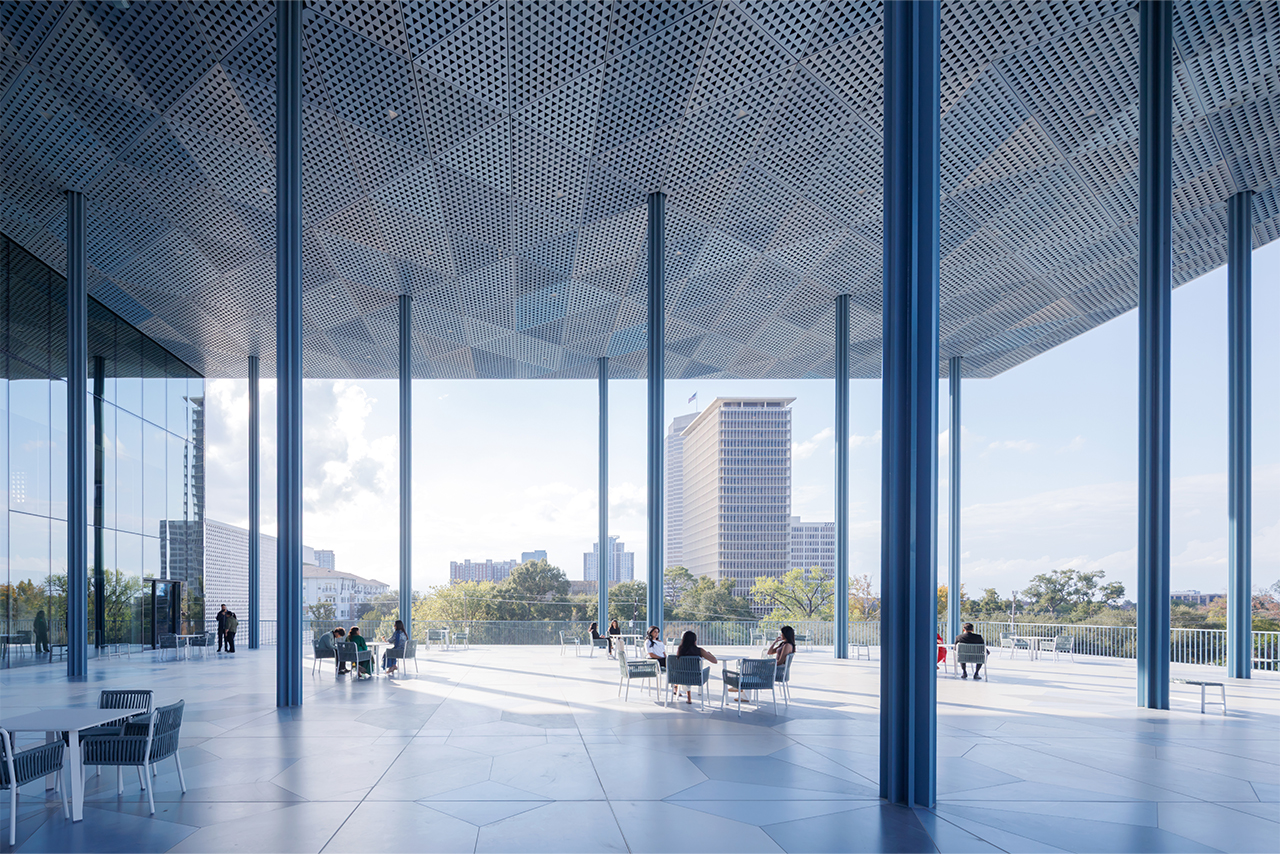
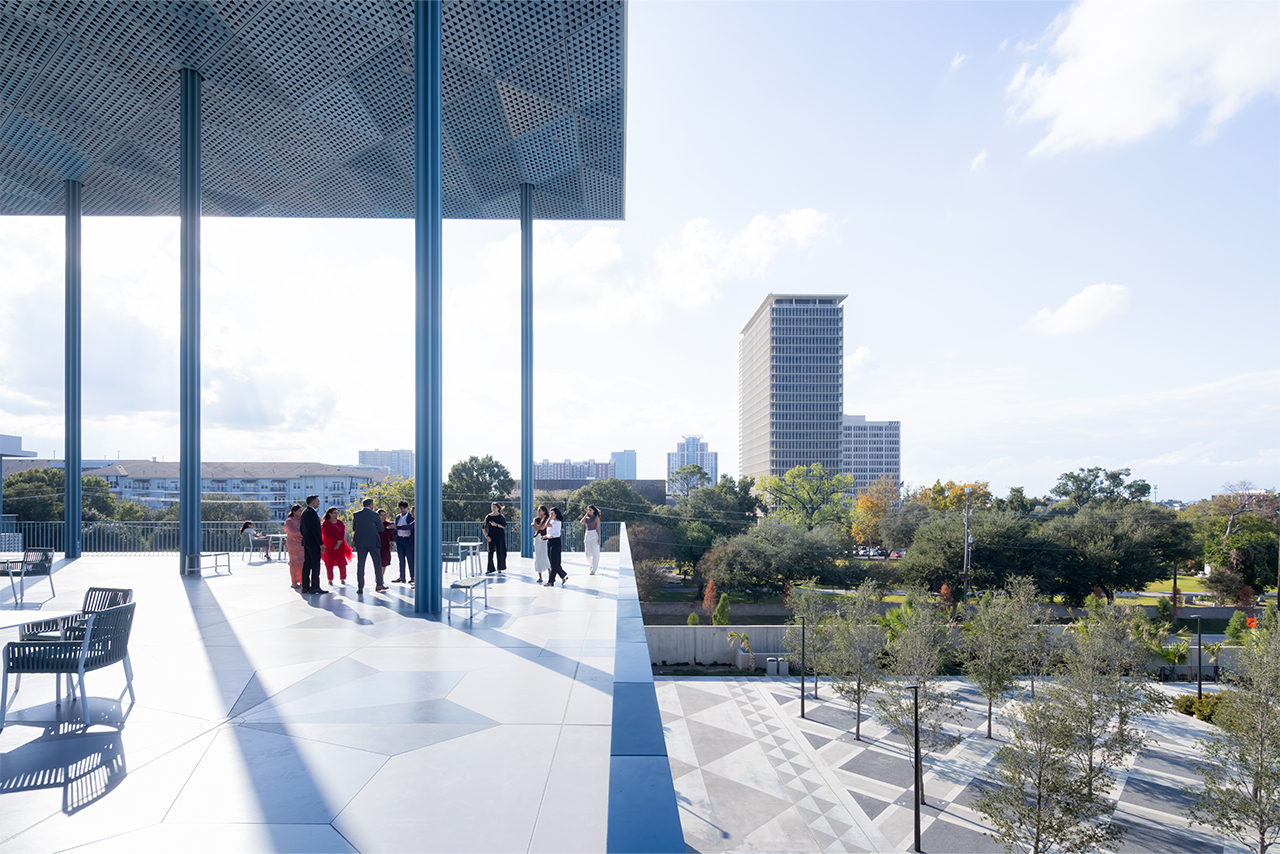
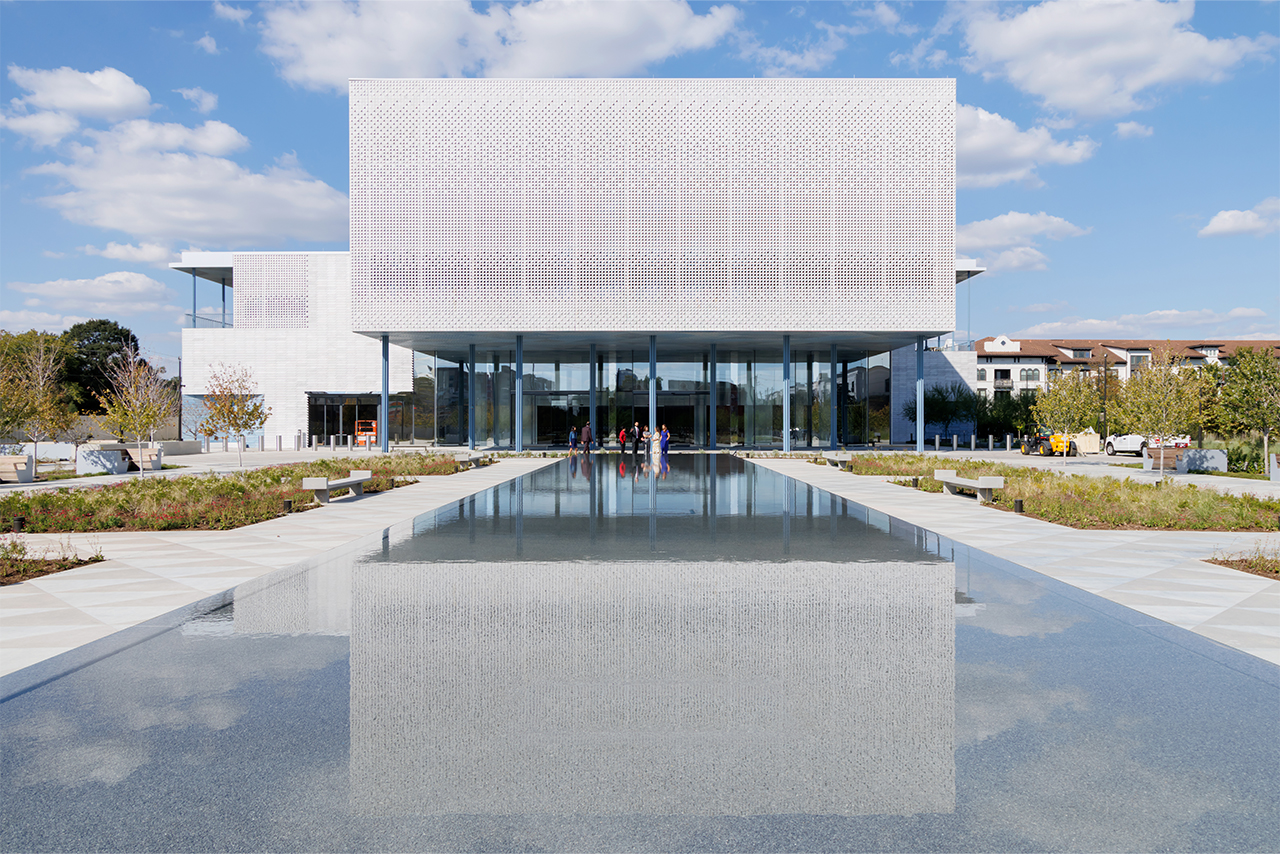
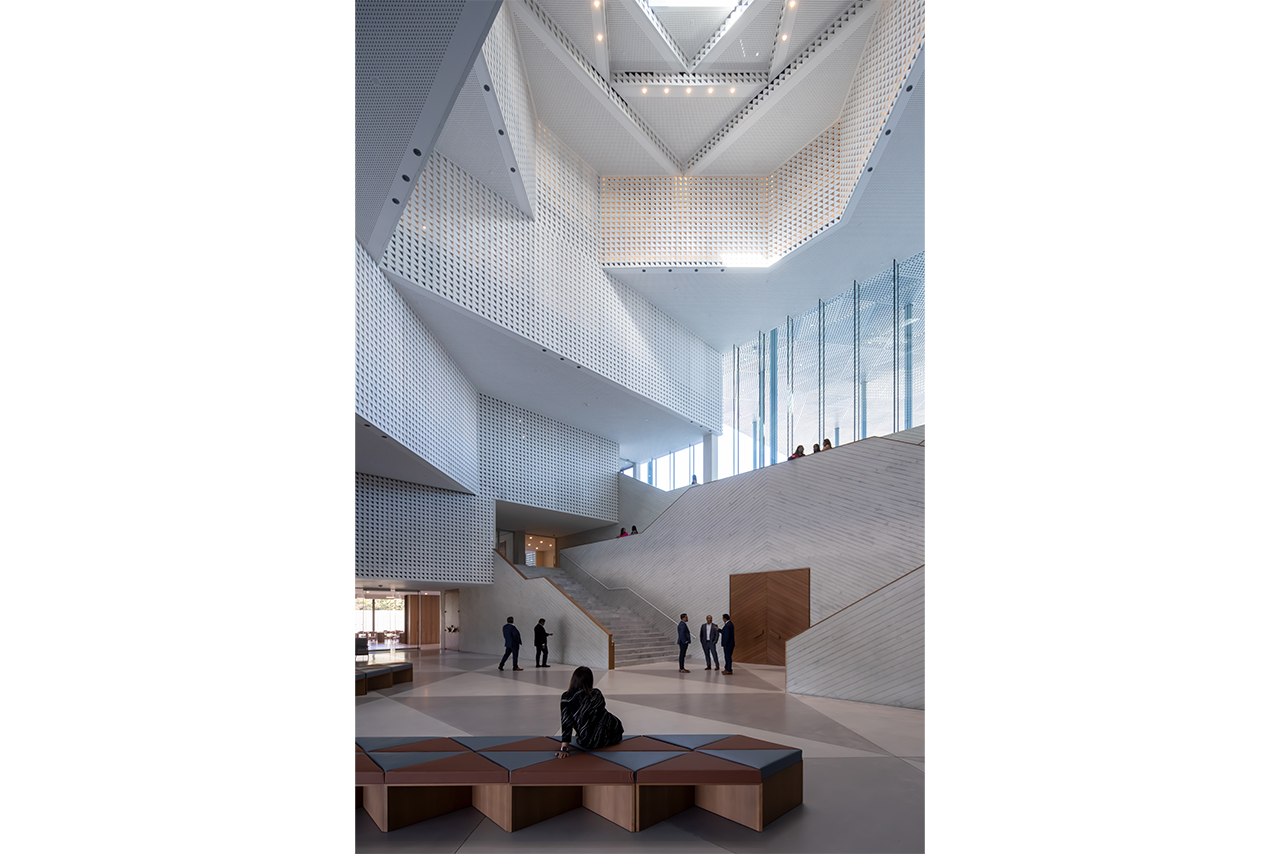
The building was designed with a compact footprint, preserving three quarters of the site as garden and making the landscape a genuine extension of the building’s spatial experience. Given Houston’s hot and humid climate and the prominence of the site, the building takes a tripartite form with each volume fronted by an eivan, a covered outdoor space, enabling social and cultural gatherings outdoors throughout the year. The eivans reduce direct solar exposure by seventy-five percent. Together with the three atriums, they form a continuous sequence of common spaces open to all regardless of faith or affiliation, which have already hosted gatherings, weddings, talks, and food markets.
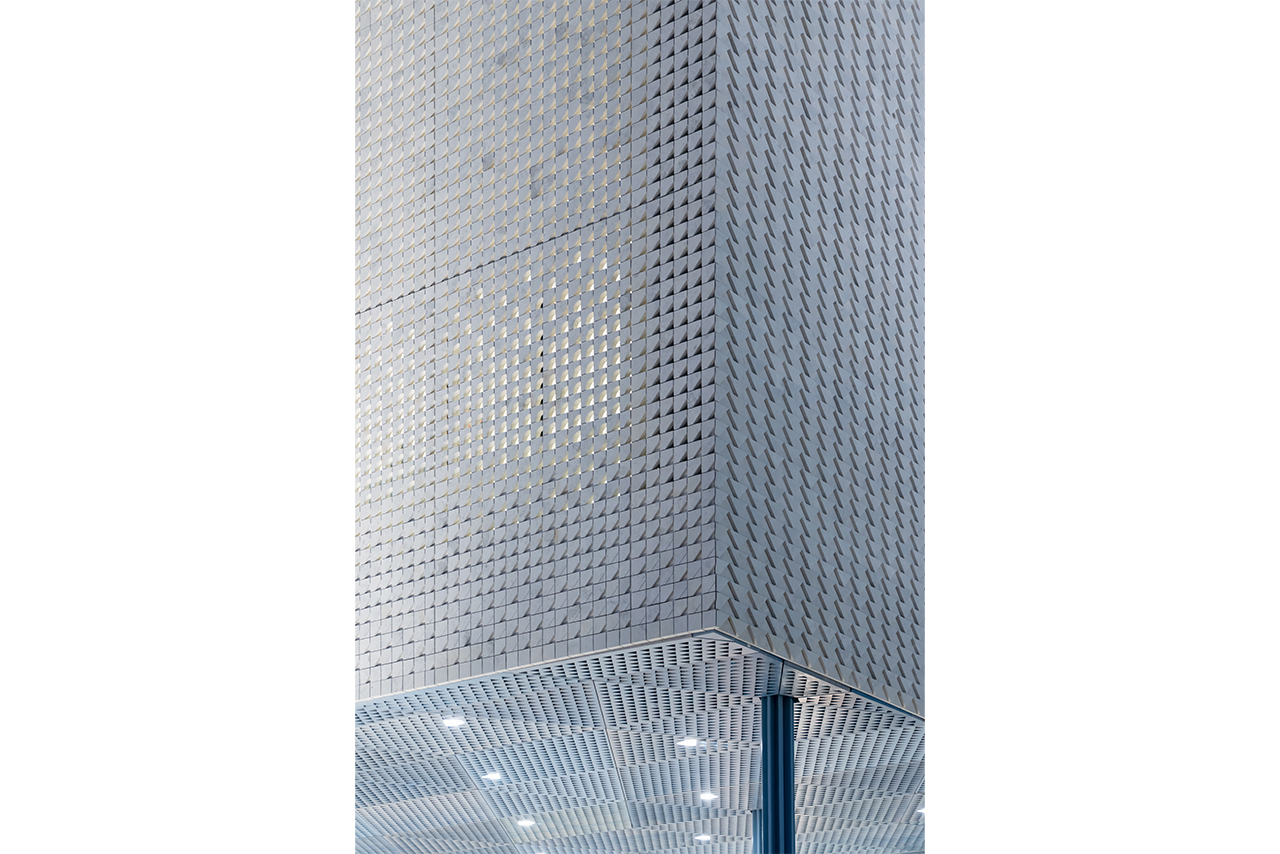
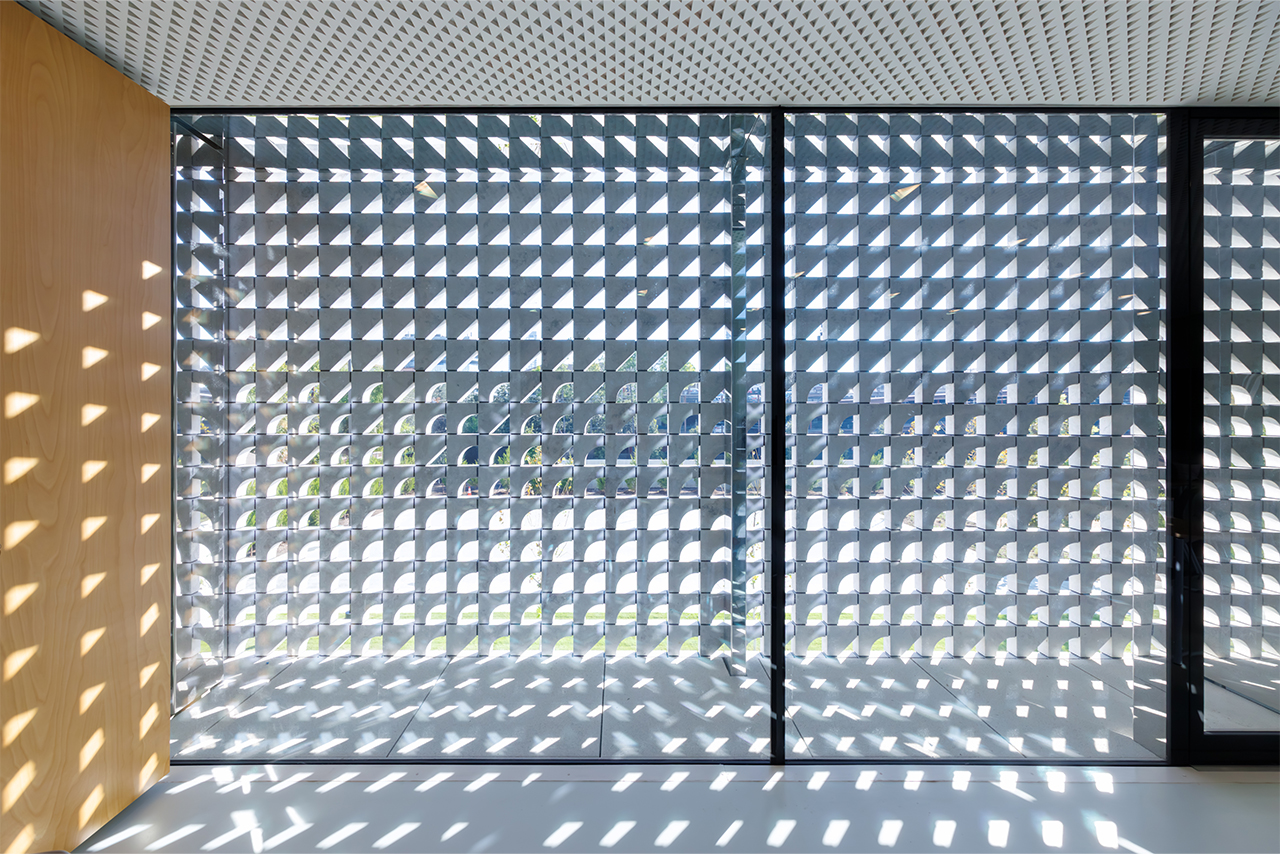
The design draws on the spatial intelligence of Islamic architecture, not through symbolic imagery or historic motifs but through geometry, construction, and light. A triangular grid organises the entire building across every scale, reconciling the north-south civic axis of the site with the forty-five degree orientation of the prayer hall toward the qibla, and extending from the landscape to the ceiling perforation. Stone screens, threaded on metal rods, shift from solid to porous depending on the needs of the spaces behind them, providing shade, privacy, and visual continuity between inside and outside. The blue of the eivan soffits resonates with the Houston sky, sometimes merging with it and sometimes standing apart, so that the building registers the changing light of the day. Three atriums draw daylight deep into the building and support a displacement ventilation system reducing energy consumption by thirty percent. At the centre lies the prayer hall: a single uninterrupted volume whose perforated aluminium ceiling transforms the weight of seven long-span steel beams into a luminous, boundless surface.
The concrete structure replaces sixty-two percent of Portland cement with slag, reducing CO2 emissions by eighty percent, and the building is designed for a hundred-year lifespan. The building has received LEED Gold certification.
The nine-acre landscape, designed by Nelson Byrd Woltz, reinterprets Islamic garden traditions through six Texas eco-regions, from Gulf Prairie to High Plains, connecting the building to Houston’s ecology while educating visitors on native horticulture. More than 800 trees and thousands of perennials establish a biodiverse, resilient framework that reflects regional identity while extending the cultural memory of the global Ismaili community.
Team
Architect - Farshid Moussavi Architecture
Landscape architect - Nelson Byrd Woltz
Structural engineer - AKT II
Architect of record - DLR group
Project Data
Location
Houston, Texas, USA
Client
His Highness the Aga Khan
Date
2019-2025
Total area
20000 m2
Photography
Iwan Baan